Commercial painting planning begins with a clear brief
Commercial painting planning should connect the appearance of your property with the way it operates. A reception area, retail space, office, or association property can involve different priorities and decision makers. WJ Custom Paintng LLC encourages a clear brief that identifies the purpose of the repaint before the scope expands.
Explain what you want to achieve. You may be refreshing customer areas, creating a more consistent palette, or updating exterior surfaces. Then name the property location and the person authorized to approve work. A useful first conversation brings the visual goal, practical requirements, and approval process into the same plan.
Define the areas and surfaces in scope
List the buildings, rooms, elevations, common areas, and other spaces involved. Within each one, identify walls, ceilings, doors, trim, and additional surfaces. Include approximate quantities where available. Also mark the areas that should remain unchanged. This prevents a broad property description from being treated as a complete work schedule.
Our commercial painting service page provides a starting point. Distinguish general repainting from technical or specialized surfaces that need separate assessment. A retail customer area, for example, should not automatically carry the same requirements as a food preparation space. Specific descriptions make the enquiry easier to evaluate.
Identify who decides and who coordinates
The person requesting information may not be the person approving colors or authorizing the work. Name those roles early. Also identify the contact who arranges access and handles day to day property questions. Clear responsibilities help prevent different instructions from being treated as equal project approvals.
For shared properties, review our condo and association painting information. Confirm the relevant board, owner, or management process. Include any bid documents or property standards that affect the requested scope. Commercial painting planning becomes more precise when the decision path is known before selections and dates are discussed.
Explain how the business uses the property
Describe operating hours, busy periods, customer routes, deliveries, and rooms with limited availability. Identify sensitive equipment, furnishings, and any security procedures. If you prefer a particular work window or phased arrangement, state it as a requirement to review. Do not assume scheduling options before the project is assessed.
The office painting page considers reception, private offices, corridors, and shared rooms. Similar questions apply to other businesses, but the details vary. Explain which areas must remain usable and who coordinates changes. The proposed work sequence should reflect the actual property rather than a generic promise about avoiding disruption.
Put preparation and protection into the proposal
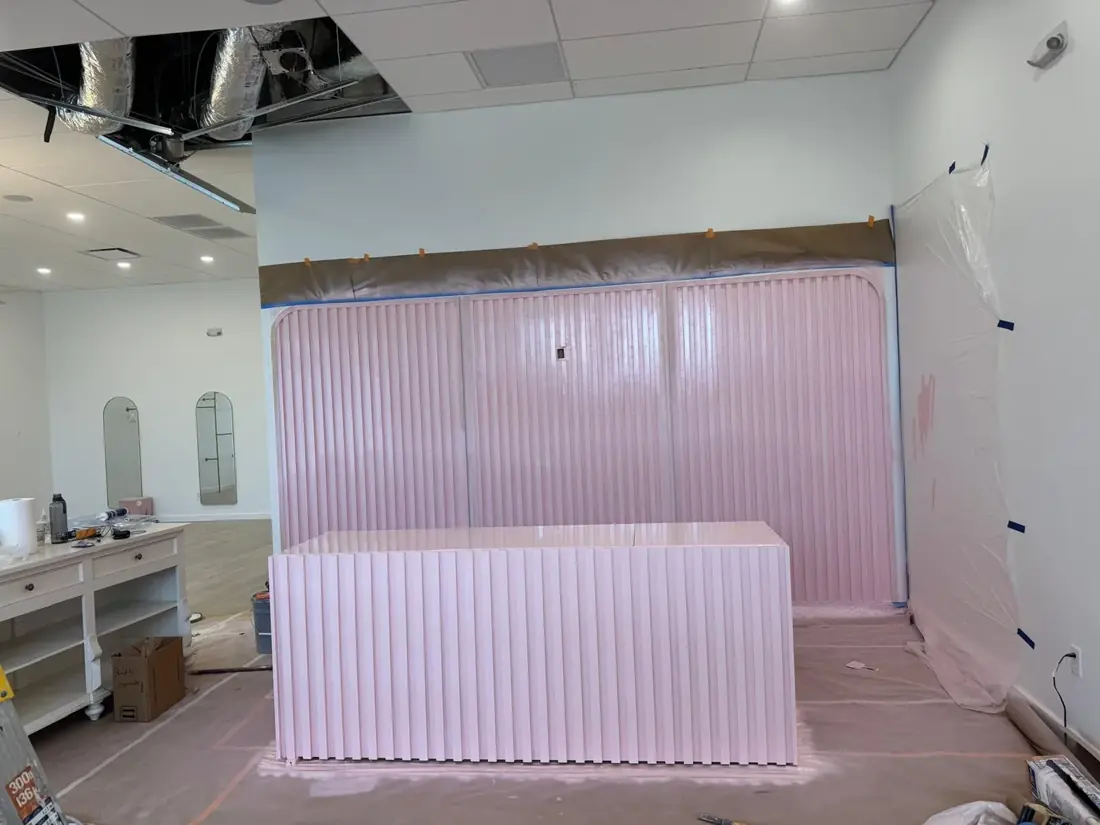
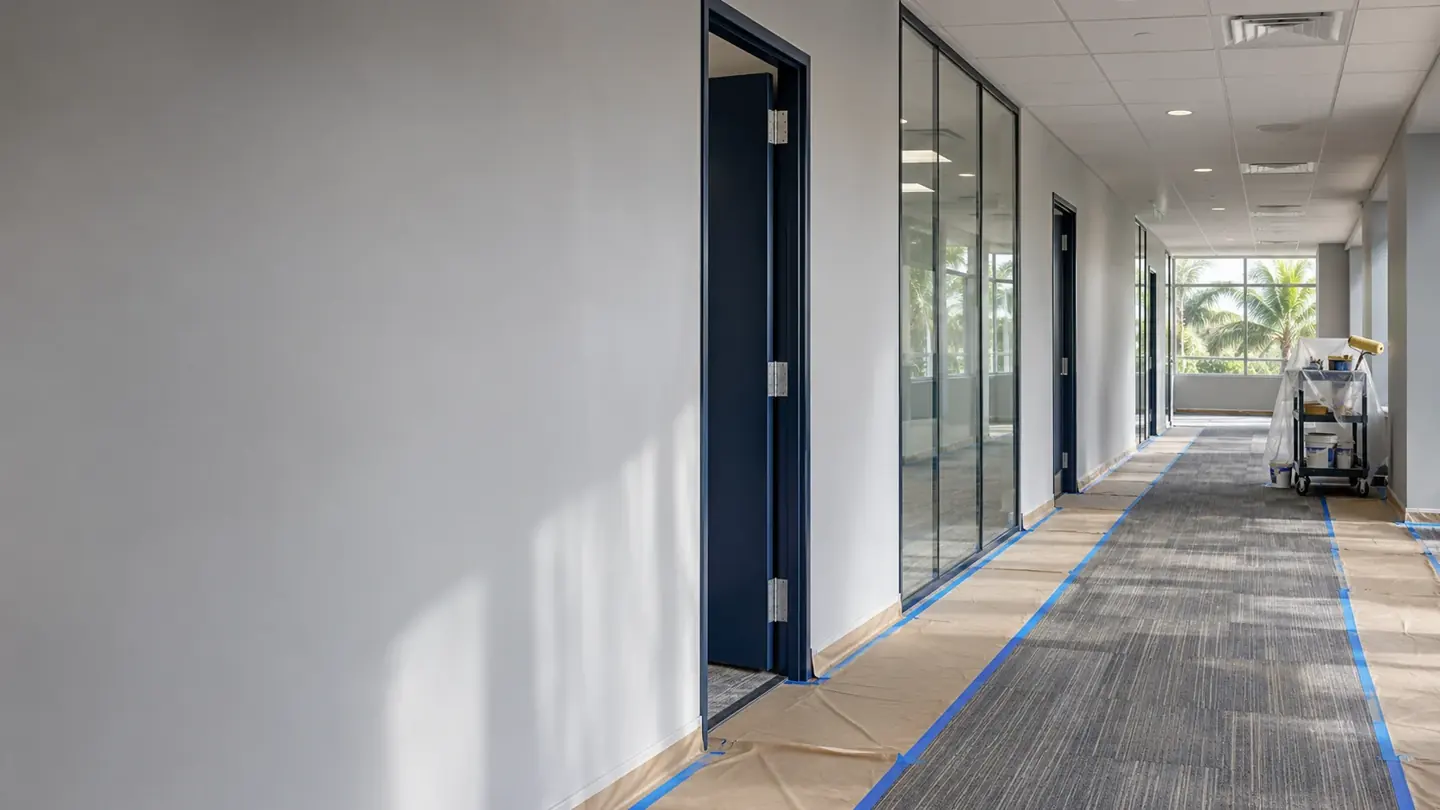
Our team considers preparation a core part of good painting. We take time to tape, mask, protect nearby areas, and prepare surfaces before coating. Identify floors, fixtures, equipment, furnishings, and adjacent finishes that require consideration. Agree which items the property team will move and which protection tasks belong in the proposed work.
We can roll and spray, depending on the substrate, finish, access, and project conditions. The application method should suit the surface and the wider plan. Our painting process overview explains how preparation connects with scope. A clear proposal makes the work behind the final color visible in the discussion.
Connect the palette with the business identity
Bring approved brand colors, existing finish information, and any property standards. Look at paint alongside lighting, furnishings, displays, flooring, and other permanent materials. A commercial palette should support the experience you want customers and staff to have. Physical samples help test that relationship in the actual environment.
Our retail and restaurant painting information explores customer facing spaces. WJ Custom Paintng LLC uses Sherwin Williams paints. Discuss the specific product and sheen with the surface and its intended use. Commercial painting planning should record approved selections clearly so the proposal describes the same finish everyone expects.
Compare complete and equivalent proposals
A price is only meaningful in relation to the work described. Compare the same surfaces, preparation tasks, repair allowances, coating choices, access assumptions, and exclusions. Check whether the proposal relies on quantities or conditions that remain unverified. If it does, understand how those points will be clarified before proceeding.
Also review coordination responsibilities. Ask who handles access arrangements, item movement, and approval of any changes. Our painting estimate information helps organize those questions. A proposal for a limited cosmetic refresh should not be compared directly with a broader repaint as though the two describe identical work.
When a budget requires priorities, identify them clearly. Separate the essential areas from optional additions and ask that any alternatives remain easy to compare. For example, a reception refresh and a wider office repaint should have distinct boundaries. This does not establish a price in advance. It gives the conversation a practical structure and helps decision makers understand what each proposed option includes before selecting the next step.
Commercial painting planning and your next conversation
Gather the property location, project purpose, area schedule, condition notes, approval contacts, operating requirements, and preferred timing. Identify which selections are confirmed and which need discussion. If several buildings or locations are involved, give each one its own scope and access information. This keeps details from different properties from becoming mixed together.
To begin commercial painting planning with WJ Custom Paintng LLC, call (239) 345 0077 or submit the online project form. The form emails your enquiry to the company. Include a short brief with the property type, surfaces, operating needs, and preferred timing. We can then discuss availability and next steps. The goal is a clear project conversation, not an instant price.
Your questions.
Considered answers.
Can I request work outside normal business hours?+
Include your preferred work windows and explain the operational reason. Any alternative schedule or phased arrangement must be reviewed for the specific scope and property. Commercial painting planning should distinguish a requested condition from an arrangement that has already been confirmed.
What should an association include in the enquiry?+
Identify the authorized contact, included buildings or common areas, approval process, and relevant property rules. Share the scope and any bid requirements clearly. Individual unit interiors and association controlled spaces may involve different responsibilities, so they should not be combined without explanation.
How should changes be handled during planning?+
Raise additions, color revisions, or timing changes before the affected work proceeds. A change may involve different materials, preparation, or coordination. Commercial painting planning should keep the agreed scope and selections clear, including any revisions reviewed by the authorized project contact.
YOUR SPACE. A FRESH PERSPECTIVE.
See the potential.
Let’s bring it to life.
Thoughtful preparation. Beautiful color. A painting plan built around your space. Let’s talk about what comes next.